Reading Glasses
Door-to-door near-vision screening and presbyopia correction across northeast Nigeria.
What is involved in a Reading Glasses visit?
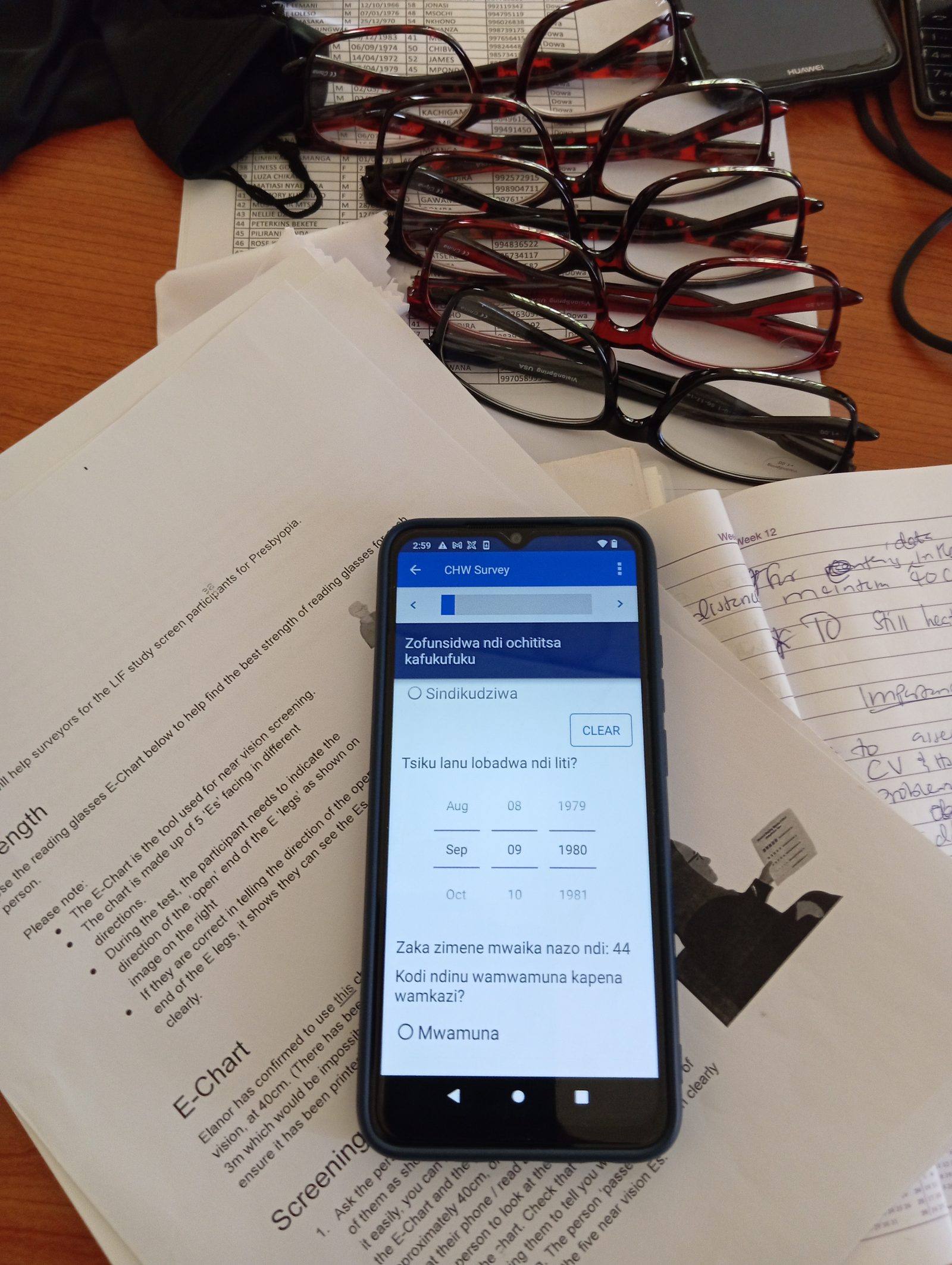
A Reading Glasses visit is a two-part encounter: near-vision screening first, then distribution. Frontline Workers screen adults aged 35 and older with a paper E-chart, identify the appropriate correction strength from five dioptre options, dispense the pair, and photograph the completed distribution for independent audit.
Near-Vision Screening
Paper E-chart test administered door-to-door to identify presbyopia in adults aged 35 and older. Standardized distance and lighting conditions are part of the certification protocol. Pre-training test averaged 36/100; post-training averaged 93.5/100.
Dioptre Selection
Five correction strengths available: +1.0, +1.5, +2.0, +2.5, and +3.0 dioptres. Workers test each beneficiary with the E-chart at the appropriate reading distance to identify the correct strength before dispensing.
Reading Glasses Dispensing
Off-the-shelf reading glasses in the matched dioptre strength, handed directly to the beneficiary. Vision correction has been shown to increase work productivity up to 22% and income up to 33% for adults in visually-intensive occupations.
Photo Verification
Every completed distribution is photographed live in the app. Photos are compared against specified criteria to ensure appropriate distribution.
Dual-Stage Certification
Four self-paced digital modules, an 80%-threshold in-app test, then a two-day in-person practical evaluation.
Siaya County, Kenya: 1,239 Verified Distributions.
GlobCom, endorsed by the Siaya County Ministry of Health, deployed Community Health Promoters (CHPs) across their existing catchment areas in November–December 2024. 25 of 32 enrolled CHPs completed self-paced digital training and in-person certification before delivering services. A daily cap of 5 distributions kept incentives aligned with CHPs’ existing core health duties.
1,387 household visits. 1,239 verified distributions. The platform flagged 26 duplicate registrations and rejected 30 shortened visits before payment was processed. Workers were paid 17–32 days after service delivery. Two months post-distribution: 12 of 19 recipients confirmed they were using their glasses, for bible study, reading, and phone use.
Interested in scaling vision correction?
Let’s build a program together, starting with your target geography and scale. We’ll come back with a delivery plan, a cost-per-pair estimate, and a list of organizations ready to run with.
Let’s Design Your Program